Wednesday, November 23, 2011
Вассер.С.П. Флора грибов Украины.Агариковые грибы
Флора грибов Украины. Агариковые грибы / Вассер.С.П.
Агариковые грибы (семейство Agaricaceae) содержат сравнительно небольшое количество видов: к настоящему времени общее число их составляет примерно 400. Они представ ляют большой научный интерес в связи с чрезвычайным своеобразием морфологии, онтогенеза и экологии. До последнего времени критической обработке подверглись немногие роды, а разграничение видов и других систематических единиц, как и выяснение филогенеза осложняется вследствие свойственного им полиморфизма, явлений параллелизма и конвергенции. Грибы, относящиеся к этому семейству, принимают активное участие в процессе гумификации почвы. Среди них имеются многочисленные ценные съедобные, широко используемые населением, лекарственные, ядовитые. Велико значение разводимых искусственно в промышленном масштабе агариковых грибов (Agaricus bisporus, A. bitorquis, A. macrosporus, A. subedulis и др.) в качестве дополнительного источника белков, витаминов разных групп, ферментов и других биологически активных веществ. В последнее время при поисках новых антибиотических, бактериостатических и онкостатических веществ, а также стимуляторов-роста животных и растений, ферментов, органических кислот и ряда других ценных веществ объектом изучения становится все большее количество видов семейства Agaricaceae.
Как указывалось на VI съезде Украинского ботанического общества (Донецк, 1977 г.), с целью наиболее полного использования грибов для нужд народного хозяйства необходимо изучение микофлоры отдельных ботанико-географических районов, а затем со ставление флоры грибов Украины.
Настоящая работа посвящена агариковым грибам Украины, планомерные исследования которых до последнего времени не проводились. Имеются лишь спорадические, фрагмен тарные сведения о некоторых видах этого семейства.
«Систематическая часть» монографии составлена по оригинальной системе, в ней дается описание видов, разновидностей и форм агариковых грибов. Приведена часть видов, которые на территории республики не найдены, но могут быть выявлены при дальнейших исследованиях, так как встречаются в соседних республиках и сопредельных странах. Одна ко результаты наших исследований все еще не могут отразить всей полноты и разнообразия видового состава агариковых грибов Украины. Из ряда ботанико-географических районов (Крымская Степь, Крымская Лесостепь, Горный Крым, Волынская Лесостепь, Левобереж ное Полесье, Западное Полесье) имеются лишь отрывочные сведения по случайным сборам различных коллекторов. В дальнейшем углубленные региональные исследования микофлоры Украины, естественно, откроют новые для республики виды, уточнят распространение многих видов.
Основная цель данной работы — выявить видовой состав агариковых грибов Украины, а также дать наиболее полные современные сведения по их синонимике, морфологии, экологии, биологии, систематике, практическому значению, распространению (максимально детально по Украине)
Приведены сведения по морфологии, анатомии, систематике, циклу развития, родственным связям, эколого-биологическим особенностям, макрохимическим реакциям карпофоров и микроструктур агариковых грибов. Рассмотрены критерии видов и предложены новые. Даны географический анализ видов, их распространение по эколого-биологическим группам, значение в природе и народном хозяйстве. В систематической части приведены ключи для определения триб, родов, внутриродовых таксонов и видов агариковых грибов. Описано 128 видов, 55 разновидностей и 22 формы агариковых грибов. Из них 9 таксонов — новые для науки, 22 вида — новые для СССР, 21 вид — новый для УССР; приведено 20 новых для науки таксономических комбинаций видового и внутривидового рангов. Для каждого таксона даны синонимика, иконография, оригинальное описание, экология, распространение по ботанико-географическим зонам УССР, по районам флоры СССР, земному шару, критические примечания.
Для микологов, биогеоценологов, геоботаников, работников лесного и сельского хозяйства, грибоводов, преподавателей и студентов вузов.


Type of material: Book (Print, Microform, Electronic, etc.)
Main title: Flora gribov Ukraini. Agarikovie gribi=Flora Fugorum RSS Ucrainicae
Published/Created: Kiev : Izdatel’stvo "Naukova Dumka", 1980.
Language: Russian
Description: 328 p. : ill. ; 26 cm.
Subjects: Mycology / Fungi
Created: 12.05.2011


Агариковые грибы СССР
Вассер С.П.
Советский, украинский и израильский учёный,
ботаник, миколог, доктор биологических наук, профессор, член-корреспондент
Национальной академии наук Украины. Признан мировым научным сообществом
как один из лидеров микологической науки
Род. 26 августа 1946 во Львове
Solomon P. Wasser
Professor, Department of Evolutionary and Environmental Biology
Office: Multi-Purpose Building, Room 220 | Phone: 972-4-8249-218 | Fax: 972-4-8288-197
Email: spwasser@research.haifa.ac.il
Subject: Biotechnology and biodiversity of fungi (theory and application)
Born: L'vov, Ukraine
Date of Birth: August 26, 1946
Marital Status: Married, with two children (Esther, 1969; Robert, 1976)
Citizenship: Israeli and Ukraine


Вассер С.П.
Агариковые грибы СССР
Киев: Наук. думка, 1985. - 184 с.
Agarikovye griby SSSR / S.P. Vasser
Вассер С.П.
ботаник, миколог, доктор биологических наук, профессор, член-корреспондент
Национальной академии наук Украины. Признан мировым научным сообществом
как один из лидеров микологической науки
Род. 26 августа 1946 во Львове
Solomon P. Wasser
Professor, Department of Evolutionary and Environmental Biology
Office: Multi-Purpose Building, Room 220 | Phone: 972-4-8249-218 | Fax: 972-4-8288-197
Email: spwasser@research.haifa.ac.il
Subject: Biotechnology and biodiversity of fungi (theory and application)
Born: L'vov, Ukraine
Date of Birth: August 26, 1946
Marital Status: Married, with two children (Esther, 1969; Robert, 1976)
Citizenship: Israeli and Ukraine


Вассер С.П.
Агариковые грибы СССР
Киев: Наук. думка, 1985. - 184 с.
Цель настоящей работы — всесторонний анализ и теоретическое обобщение оригинальных и литературных данных по флоре, систематике, филогении, эволюции, классификации, распространению, хозяйственному значению агариковых грибов СССР. Кроме того, небольшое семейство Agaricaceae при углубленном сравнительно-систематическом изучении его представителей с использованием разнообразных методов и критериев может послужить модельным объектом для уточнения некоторых общих вопросов систематики высших Basidiomycetes.
Настоящая работа представляет собой первую критическую монографическую сводку по агариковым грибам Советского Союза, в которой содержитси конспект известных на современном уровне знаний видов этого семейства, включая новые для науки виды и комбинации, предложенные нами. Впервые также определены статистическими методами сравнительной флористики степень видового и родового сходства, специфика видового состава семейства Agaricaceae областей флоры Советского Союза н отдельных его регионов. Суммированы и критически проанализированы данные по классификационным схемам по рядка Agaricales s. I., обсуждены объем и систематическое положение в них семейства Agaricaceae. Описаны новый для науки порядок Hygro-phorales и новое семейство порядка Tricho lorn at ales — Catathelasmata-ceae. Для ряда родовых и внутриродовых таксонов (Agaricus, Lepiota, Cystoderma, Leucocoprinus) семейства Agaricaceae разработана оригинальная система. Изучены геометрические особенности базндий, химические цветовые реакции карпофоров и микроструктур, культурально-морфологические особенности агариковых грибов как дополнительных таксономических критериев.
Проведен а peaлогический анализ географического распространения агариковых грибов Советского Союза, в результате которого выделены географические элементы и установлены типы ареалов в пределах каждого элемента. Высказаны предположения о времени и возможных центрах возникновения агариковых грибов на земном шаре; обсуждается явление эндемизма у них.
Agarikovye griby SSSR / S.P. Vasser
Author:
Vasser, Solomon Pavlovich.
Title:
Agarikovye griby SSSR / S.P. Vasser ; [otvetstvennyĭ redaktor I.A. Dudka]
Imprint:
Kiev : Naukova dumka, 1985.
Phys. Descr:
182, [1] p., [32] p. of plates : ill. ; 25 cm.
Note:
At head of title: Akademi︠i︡a nauk Ukrainskoĭ SSR. Institut botaniki im. N.G. Kholodnogo AN USSR.
Bibliog.:
Bibliography: p. 168-[183]
Subject:
Agaricales -- Former Soviet republics.
Agaricales -- Former Soviet republics -- Identification.
Edible mushrooms -- Former Soviet republics.

საქართველოს მცენარეულობა / ქვაჩაკიძე, რევაზ
საქართველოს მცენარეულობა / რ. ქვაჩაკიძე; რედ. კ. იაშაღაშვილი;
თბ., – 2009 – 154 გვ. – – ბიბლიოგრ: გვ. 146–154. ISBN 978-9941-0-1206-8 : UDC: 581.9(479.22)
თბ., – 2009 – 154 გვ. – – ბიბლიოგრ: გვ. 146–154. ISBN 978-9941-0-1206-8 : UDC: 581.9(479.22)
განხილულია საქართველოს მცენარეული საფარის სტრუქტურა და მისი ცვალებადობა ქვეყნის ტერიტორიის გეოლოგიური ისტორიის მანძილზე, პალეოზოური ერის კარბონული პერიოდიდან დღემდე. გამოყენებულია არსებული მდიდარი პალეოგეოგრაფიული და პალეობოტანიკური წყაროები. წიგნის მეორე ნაწილში მოცემულია საქართველოს მცენარეულობის ძირითადი ტიპების გეობოტანიკური დახასიათება. გამოყენებულია ავტორის მრავალწლიანი კვლევის მასალები – გამოქვეყნებული და ხელნაწერები, აგრეთვე არსებული ლიტერატურული წყაროები.
ავტორის წინათქმა; ნაწილი პირველი საქართველოს მცენარეული საფარის ისტორიის ძირითადი ეტაპები და თავისებურებები; ნაწილი მეორე საქართველოს მცენარეულობა; 1. საქართველოს მცენარეულობის სტრუქტურისა და დინამიკის ზოგიერთი თავისებურება და მათი ასახვა გეობოტანიკურ კვლევებში; 2. საქართველოს მცენარეულობის ძირითადი ტიპები; 2.1. ტყეები; 2.2. ბუჩქნარები; 2.3. მდელოები; 2.4. სტეპები; 2.5. ნახევრად უდაბნოები; 2.6. ჭაობის მცენარეულობა; ბოლოთქმა; რეზიუმე (ინგლისურ ენაზე); ლიტერატურა.

VEGETATION OF GEORGIA
Kvachakidze, Revaz
The structure and change of the Georgian vegetation have been considered throughout the geological history of the territory of the country from the Carbon period of the Paleozoi to this day.The avialable paleogeographical and paleobotanical sources have been used.
In the II part of the book phytocenological characteristic of the principal vegetation types of Georgia – Forests, Scrub, Meadows,Steppes, Semi-Deserts, Wetland vegetation.

Summary
The history of the vegetational cover of Georgia runs to 300 million years. From the Carbon period of the Paleozoic era to the end of the Mezozoic era the islands of the Tetis Ocean (the initial stage of the mountains of the Greater and Minor Caucasus) were covered with the rich vegetation of a tropical type. The ancient plants, representatives of Lepidodendraceae, Sigillariaceae, Calamitaceae, Cordiataceae, Bennettitaceae, Caytoniaceae, Cicadaceae, Ginkgoaceae, Araucariaceae and other families took part in its formation.

Beginning from the Tertiary period of the Kainozoi (Paleocene, Eocene)the overland territory of Georgia (the Greater and Minor Caucasus)considerably extended and the tropical climate was gradually replaced by the subtropical climate. A Substantial change in the local vegetational cover took place. It led to the replacement of the local tropical plants by subtropical, mainly evergreen vegetation, formed by species from Pteridospermae, Palmaceae, Pinaceae, Magnoliaceae, Lauraceae, Myrtaceae, Taxodiaceae and some other taxons.
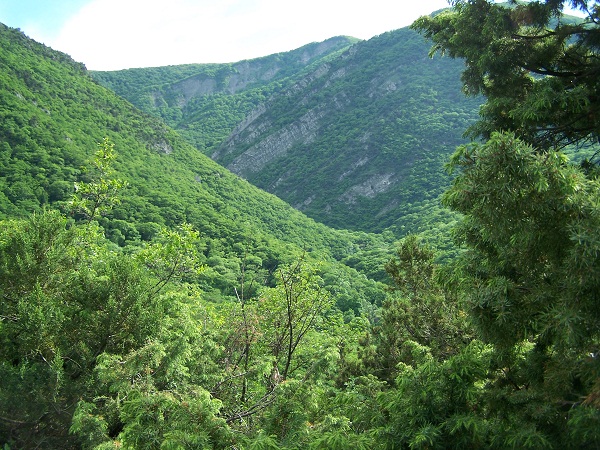
In the Oligocene when the active processes of formation of folded mountains of the Greater and Minor Caucasus took place, the representatives of the Turgai fl ora – coniferous and leaf-shedding species took root in the local subtropical evergreens.

Since the Miocene (25 million years ago) the vegetational cover of Georgia entered a new phase of its development. The vegetation in the Miocene was rather rich and diverse. It was formed by the phytocenoses of evergreen vegetation, their dominants being the representatives of Sequoia, Cedrus, Libocedrus, Tsuga, Abies, Picea, Pinus, Ficus, Laurus, Cinnamomum, Myrica, Liquidambar, Magnolia, Camellia and other genera. The phytocenoses of leaf-shedding plants their dominants being ancient species of Platanus, Quercus, Castanea, Carpinus, Acer, Alnus, Salix, Populus, Pterocarya and other genera were also part of the vegetational cover. There grew some modern species (Abies nordmanniana and others) as well. In the Miocene the mountains of the Greater and Minor Caucasus reached the height of 1000-1500 m. above sea level. Distribution of the vegetation on the mountain slopes was of vertical and zoning character: subtropical evergreen forests occupied mainly the lower zone, while the coniferous and leaf-shedding forests – the upper zone.

In the Pliocene (10-1 million years ago) the territory of Georgia was mainly of modern form. A gradual change of the climate (a fall in the temperature) caused considerable alterations in the structure of the local vegetation. The plants immigrated from neighbour and distant countries greatly contributed to it. Towards the end of the Pliocene (4-1 million years since) the structure of the vegetation and the character of distribution of main sintaxons on the territory of Georgia approached the modern ones. In the Late Pliocene and Early Pleistocene the territory of Georgia was in fact completely covered by forests.

In Western Georgia (Kolkheti) the forest vegetation still had the plant species which nowadays are not naturally found in Georgia (the plants, having their related forms spread in East-Asian, Himalayan, North-American and Mediterranean subregions of Golarctic), specifi cally the species of the genera of Sequoia, Metasequoia, Cryptomeria, Cunninghamia, Cedrus, Libocedrus, Taxodium, Tsuga, Thuja, Magnolia, Liquidambar, Carya, Mahonia, Cinnamomum, Aesculus, Platanus, Robinia and others. Some of them were the dominants of forest associations. On the slopes of the Caucasian mountains vertical belts were developed: the lower belt was formed by subtropic (mainly evergreen) forests and the upper belt – by coniferous and leaf-shedding forests. In Eastern Georgia with the climate being comparatively dry and more continental the evergreen species were not numerous. The lower part of the mountain slopes and the plain were partly covered by arid forests (the dominants – Pistacia mutica, Celtis caucasica, Juniperus foetidissima, J.polycarpos) and hemixerophyl forests (the dominants – the species of Quercus etc.). In the same place a big territory was already covered by the steppe vegetation (the dominants – the species of Artemisia, Botriochloa, Stipa, Festuca etc.).

In the Pleistocene (the last one million years) especially in its glacial epochs the vegetation of Georgia lost a great number of thermophilic species of the Tertiary forest fl ora. In Western Georgia (Kolkheti - due to its comparatively warm an humid climate several species of evergreens survived: Laurus nobilis, Laurocerasus offi cinalis, Rhodo¬dendron ponticum, Rh. ungernii, Rh.smirnowii, Ilex colchica, Buxus colchica, Ruscus ponticus, R.colchicus, Hedera colchica etc. These species remain the dominants of local relict forest cenoses to this day. Of the coniferous tertiary species survived Abies nordmanniana, Picea orientalis, Pinus pithyusa, Taxus baccata. They are also the dominants of the local relict coniferous forests. In Western Georgia the tertiary forests (coniferous and leaf-shedding) enlarged the area and strengthened their positions. They settled on the territory of the Iori Upland, formed in the period.

The majority of tertiary heat-loving leaf-shedding species also became extinct. Only few species survived – Castanea sativa, Zelkova carpinifolia, Quercus hartwissiana, Q.imeretina, Q.pedunculifl ora, Q.pontica, Betula medwedewii, Alnus barbata, Populus canescens, Pterocarya pterocarpa, Rhododendron luteum, Vaccinium arctostaphylos, Hypericum androsaemum, H.inodorum etc. These dominating relict species and the young Caucasian leaf-shedding plants (Fagus orientalis, Carpinus caucasica, Quercus iberica, Betula litwinowii etc.) formed in the Pleistocene the modern leaf-shedding forests of Georgia. From the local (Caucasian) and immigrated herbaceous species the meadow vegetation of Georgia was formed, which occupied vast space in subalpine and alpine belts of the Greater and Minor Caucasus. On the plain of Western Georgia the steppe area got expanded. Its phytocenoses were formed of the local tertiary and immigrated to Georgia species in the Pleistocene (from arid neighbour regions).

The phytocenotic variety of forest formations is not identical. Fagus orientalis forests is characterized by the highest phytocenotic variety – 52 associations, which makes up almost half of the Georgian forests having wide altitudinal and horizontal prevalence (area). Other forest formations are represented by the following number of associations.

In Holocene (the last 12-10 thousand years) the structure of the local vegetation underwent a considerable change due to a periodical change in the climate.
In the Middle Holocene the natural structure of the vegetation and the character of distribution of the vegetation syntaxons of Georgia was finally developed (except for the forests; the natural vegetation is formed by shrubs, meadows, steppes, substeppes and marsh types of vegetation).

After the Middle Holocene the vegetation of Georgia underwent a change due to human economic activities. The scale of anthropogenic changes of the natural (virgin) vegetation kept increasing. The results of these changes consist in the following:

1. A quantity of forests decreased (nowadays the forests cover 35-38% of the total territory of Georgia, mainly the slopes of the Greater and Minor Caucasus);
2. A quantity of virgin forests greatly declined making up 18-20% of all forests (about 400000 hectares).
3. The structure of the economic vegetation (forests, meadows, steppes, substeppes) is more or less disturbed, badly decreased is the productiveness of phytocenoses.

In the II part of the book phytocenological characteristic of the principal vegetation types of Georgia – Forests, Scrub, Meadows, Steppes, Semi-Deserts, Wetland vegetation. In the vegetation of Georgia forests are dominated. 98% of them are mountain forests, located on the slopes of the Greater and Lesser Caucasus ranges, 100 (400) – 2300 (2600) m above sea level. In the plain (Kakheti Lowland, Iberian plain, plateaux) natural forests remain in small areas, locally, most part of which are protected nowadays (nature reserves and national parks).

Abies nordmanniana forests – 32 associations, Carpinus caucasica – forests – 28 associations, Quercus iberica forests – 25 associations, Pinus sosnowskyi forests – 18 associations, Picea orientalis forests – 17 associations, Batula litwinowii forests – 16 associations, Castanea sativa forests – 15 associations, Quercus macranthera forests – 8 associations, Acer trautvetteri forests – 8 associations, Alnus barbata, A.incana forests – 8 associations, Juniperus foetidissima, J.polycarpos forests – 11 associations, Zelkova carpinifolia forests – 6 associations, Quercus pedunculi flora forests – 6 associations, Pistacia mutica forests – 5 associations, Quercus imeretina forests – 4 associations, Pinus pithyusa forests – 4 associations, Fraxinus excelsior forests – 4 associations, Populus tremula forests – 3 associations, Populus canescens, P. nigra forests – 3 associations, Quercus dschorochensis forests – 2 associations, Taxus baccata forests – 1 association, Salix excelsa forests – 1 association. A brief characteristics (diagnostics) of forest associations given in the work embraces dominants and characteristic species (according to layers), structure (layer structure, density of canopy, understorey and grass cover), habitat conditions (altitude, slope exposition and inclination, soil capacity and humidity).

Other vegetation types of Georgia are characterized – Scrub, Meadows vegetation, Steppe vegetation, Semi-Deserts vegetation, Wetland vegetation.

The phytocenotic diversity of the Georgian forests is high showing itself in the forests typologic variety. 277 associations of 23 formations have been registered in all.

Type of material:
|
Book (Print, Microform, Electronic, etc.)
|
Personal name:
|
Kvachakidze, Revaz
|
Author:
|
Kvachakidze, Revaz
|
Main title:
|
Vegetation of Georgia
|
Title/Heading:
|
Saqartvelos mtsenareuloba
|
Abbreviated Title:
|
Saq. mtsen.
|
Alternate Title:
| |
Similar Titles:
| |
Tags:
| |
Published/Created:
|
Tbilisi
|
The Georgian National Academy of Sciences , 2009
| |
Related names:
|
Kakha Jashagashvili
|
Description:
|
154 p. ; 21 cm.
|
Includes bibliographical References (p. 146 - 154)
| |
Subjects:
|
Forests / Plants / Vegetation / Phytocenoses
|
Subject Headings:
|
Phytocenotic diversity / phytocenological characteristic
|
Kolkheti / Georgia / The Greater and Minor Caucasus
| |
Subject/Content:
|
The structure and change of the Georgian vegetation
|
Have been considered throughout the geological
| |
History of the territory of the country from the Carbon
| |
Period of the Paleozoi to this day.The available
| |
Paleogeographical and paleobotanical sources have
| |
Been used. In the II part of the book phytocenological
| |
Characteristic of the principal vegetation types of
| |
Georgia – Forests, Scrub, Meadows,Steppes, Semi-
| |
Deserts, Wetland vegetation.
| |
ISBN:
|
978-9941-0-1206-8
|
Dewey class no.:
|
581.9(479.22)+ 581.524+582.382.4+582.382.8
|
Language code:
|
geo [Georgian]
|
eng [English]
| |
Country code:
|
gs [Georgia (Republic)]
|
Geographic area code:
|
gs [Georgia (Republic)]
|
Statement of
| |
Responsibility:
|
Prof. Revaz Kvachakidze;
|
Tbilisi Botanical Garden And Institute Of Botany
| |
Abstract/Summary:
|
The history of the vegetational cover of Georgia runs
|
To 300 million years. From the Carbon period of the
| |
Paleozoic era to the end of the Mezozoic era the islands
| |
Of the Tetis Ocean (the initial stage of the mountains
| |
Of the Greater and Minor Caucasus) were covered
| |
With the rich vegetation of a tropical type. The ancient
| |
Plants, representatives of Lepidodendraceae,
| |
Sigillariaceae, Calamitaceae, Cordiataceae,
| |
Bennettitaceae, Caytoniaceae, Cicadaceae,
| |
Ginkgoaceae, Araucariaceae and other families
| |
Took part in its formation.
| |
Notes:
|
Softcover
|
The Georgian National Academy of Sciences
| |
Saqartvelos metsnierebata erovnuli academia [geo]
| |
DDC/UDC Subject:
|
Forests / Plants / Vegetation / Phytocenoses
|
Biology / Life sciences / Geobotany
| |
UDC Class Number:
|
582.382.4
|
Description:
|
Lepidodendraceae
|
UDC Class Number:
|
582.382.8
|
Description:
|
Sigillariaceae
|
Total Copies:
|
2
|
Available:
|
2
|
Call Number:
| |
Request in:
|
Scientific Library of Institute of Botany of Ilia State
|
University
| |
Status:
|
Available
|
Subscribe to:
Posts (Atom)